
Is Bryce Canyon worth staying late for?
Bryce Canyon is worth staying after sunset when the roads and developed viewpoints are safely accessible. The main catch is elevation: a mild day can become a cold, windy or icy night, so weather and road conditions belong in the decision from the beginning. Self-guided stargazing is available year-round, and ordinary viewing does not require a reservation. The easiest choices are established viewpoints such as Paria View, Sunset Point, Sunrise Point and Inspiration Point.
The Star Window’s take
- Best for: Viewpoint-based stargazing, ranger astronomy programs and high-elevation skies
- Main advantage: Established overlooks with broad sky access
- Main limitation: Cold, snow, road conditions and cliff-edge darkness
- Best first move: Choose one paved viewpoint and arrive before full darkness
Is tonight worth it?
At Bryce, temperature and road conditions can matter as much as cloud cover. Go: Mostly clear, safe roads and manageable wind and cold. Go for a shorter session: Bright Moon or partial cloud, but a safe overlook remains accessible. Choose another night: Snow, ice, dangerous wind, heavy cloud or road closures. Next step: Check tonight’s stargazing conditions
Which viewpoint should you use?
Bryce is easier to navigate than a remote desert park because the best-known options are formal overlooks. The challenge is choosing a safe viewpoint that fits the night’s road, wind and crowd conditions.
Paria View
A strong option when you want an established overlook and a clear destination. It is especially useful when you want to avoid wandering among several nearby rim stops after dark. Confirm road and parking access after snow or storms.
Sunset Point and Sunrise Point
These are recognizable, paved choices near the main visitor corridor. They are easier for a first visit but may bring more headlights, foot traffic and late-arriving visitors.
Inspiration Point
This viewpoint offers another formal location and a dramatic landscape, but darkness makes cliff edges and icy surfaces harder to judge. Stay within signed, developed areas and do not walk toward an unlit edge for a better composition.
Ranger astronomy programs
Programs can add telescopes and interpretation that a self-guided visit does not provide. Dates, locations and telescope availability change, so check the park calendar rather than assuming a program runs every night. Best first-visit rule: Choose one developed overlook, park before full darkness and resist turning the night into a tour of every rim viewpoint.
What will the sky look like?
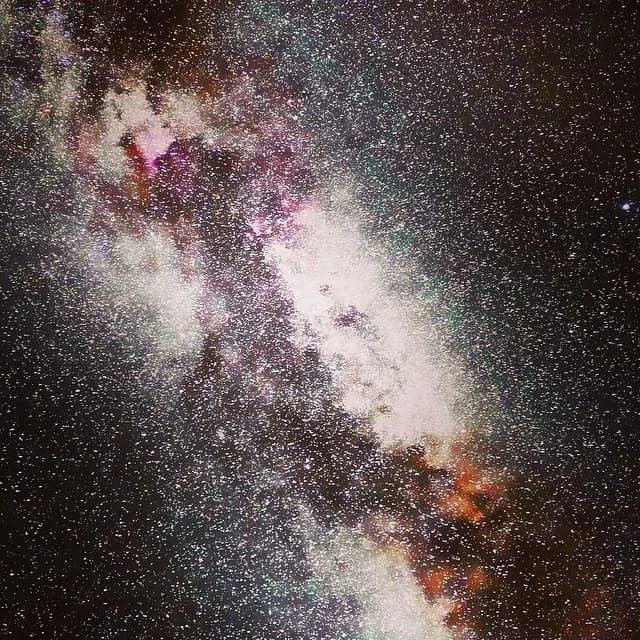
Under clear, low-Moon conditions, Bryce can show a dense field of stars, familiar constellations and the Milky Way in season. The sky will look richer than an urban sky, but not like a processed photograph. The hoodoos and canyon rim give a bright-Moon night a second purpose. Moonlight reduces faint objects but reveals the shapes that disappear on a fully dark night. High elevation does not guarantee a clear or steady view. Cold, wind, haze, smoke and unstable air can still weaken the session even when the daily forecast icon looks clear.
By equipment
Naked eye: Broad sky, constellations, meteors and the Milky Way in season. Binoculars: More stars and bright clusters. Telescope: Especially useful during an official astronomy program or from a stable developed area. Camera: Strong landscape potential, but stay away from cliff edges and traffic paths.
What can spoil the night?
- Cold and wind at elevation
- Snow or ice on roads and walkways
- Headlights at popular overlooks
- A low target hidden by terrain
- Assuming a ranger program is available without checking
Access and parking
Self-guided viewing is available year-round, and ordinary viewing does not require a reservation. Use established viewpoints and parking areas. Facilities and ranger programs follow separate schedules. The park’s year-round access does not mean every road, walkway or viewpoint is equally safe after snow, ice or wind. Check the official NPS stargazing page, current conditions and calendar before leaving.
Safety and final checks
- Check clouds, Moon timing, wind, temperature and road status.
- Bring more layers than the daytime temperature suggests.
- Choose the viewpoint before sunset.
- Stay within signed developed areas and away from cliff edges.
- Save the map offline.
- Confirm astronomy-program dates separately.
What should you do if conditions change?
If a viewpoint is windy or busy, try another established overlook rather than walking into an unlit area. If roads are poor, shorten the trip instead of treating a dark-sky forecast as more important than safe access.
Frequently asked questions
Is Bryce Canyon good for stargazing?
Yes. The park offers dark skies and several developed rim viewpoints that make the first location easier to identify. A useful visit still depends on clouds, Moon timing, wind, temperature, road conditions and safe footing near the rim.
Where should beginners go?
Use a developed viewpoint such as Paria View, Sunset Point, Sunrise Point or Inspiration Point. Choose one before sunset, use the signed parking area and avoid turning the night into an improvised walk among unlit rim stops.
Is the park open for self-guided viewing?
Self-guided viewing is available year-round, subject to current road, parking and area conditions. Facilities and ranger programs keep separate schedules, so check the official conditions page before traveling.
Can you see the Milky Way?
It may be visible when the relevant part of the Milky Way is seasonally above the horizon and the sky is clear, dark and low in moonlight. Use the date-specific Milky Way planner for timing rather than relying on the park’s dark-sky status alone.
Are telescope programs offered every night?
No. Program dates, locations and telescope availability change. Check the current NPS calendar and treat a ranger program as an added opportunity, not a guaranteed part of every visit.
Does a full Moon ruin the visit?
No. It reduces faint-star and Milky Way contrast, but it can reveal the canyon rim and hoodoo shapes that disappear in full darkness. Choose a low-Moon night for faint targets and a brighter night when the landscape is part of the goal.
Do you need a telescope?
No. The broad sky, constellations and seasonal Milky Way are naked-eye experiences. Binoculars are an easy addition, while a telescope is optional and best used from a stable developed area or during a confirmed astronomy program.
Official sources
Source check completed July 28, 2026. Recheck current official alerts before travel.