
Is Voyageurs worth the trip for stargazing?
Voyageurs is worth considering when you want a dark lake horizon and can match the location to the way you will actually reach it. The park includes straightforward drive-up areas, but many of its best-known views require a trail, dock, campsite or boat. The park offers vehicle-accessible options, but many of its best-known landscapes require a trail, dock, campsite or boat. First-time visitors should begin with a confirmed drive-up area.
The Star Window’s take
- Best for: Milky Way viewing, lake-horizon skies, meteor watching and possible aurora
- Main advantage: Two designated easy-access areas plus lake-horizon options elsewhere in the park
- Main limitation: Seasonal access, insects, cold and water-dependent locations
- Best first move: Choose a vehicle-accessible site before considering remote options
Is tonight worth going?
Voyageurs needs a location-specific cloud forecast. Lake weather, fog and seasonal road access can change the experience quickly. Go: Mostly clear, safe road or water access and a useful dark window. Go for aurora potential: Northern activity is elevated and clouds leave a clear northern horizon. Choose another night: Heavy cloud, fog, unsafe ice or water conditions, storms or inaccessible roads. Next step: Check tonight’s stargazing conditions
Where should you go?
The most important distinction at Voyageurs is not which site is darkest. It is whether you can reach it safely after dark.
Meadwood Road Day Use Area
A practical drive-up choice for a first visit. It gives you a named destination without requiring a boat, campsite or unfamiliar night trail. Confirm the road and day-use access before traveling late.
Upper Rainy Lake Visitor Center parking area
Another vehicle-accessible option with a recognizable destination and a simpler route. Visitor-center services follow seasonal hours, so do not assume the building or restrooms remain available because the parking area is accessible.
Voyageurs Forest Overlook parking area
The NPS stargazing activity page identifies the parking area as a viewing option. Do not treat the overlook trail itself as a default nighttime route: the trail has separate use guidance, and the former overlook is affected by tree growth. Confirm current access and use the developed parking area unless official guidance supports a different plan.
Kettle Falls and water-access sites
These can offer broad, dark horizons, but they are not casual drive-up recommendations. They require a separate transportation, navigation and overnight plan.
What will the sky look like?
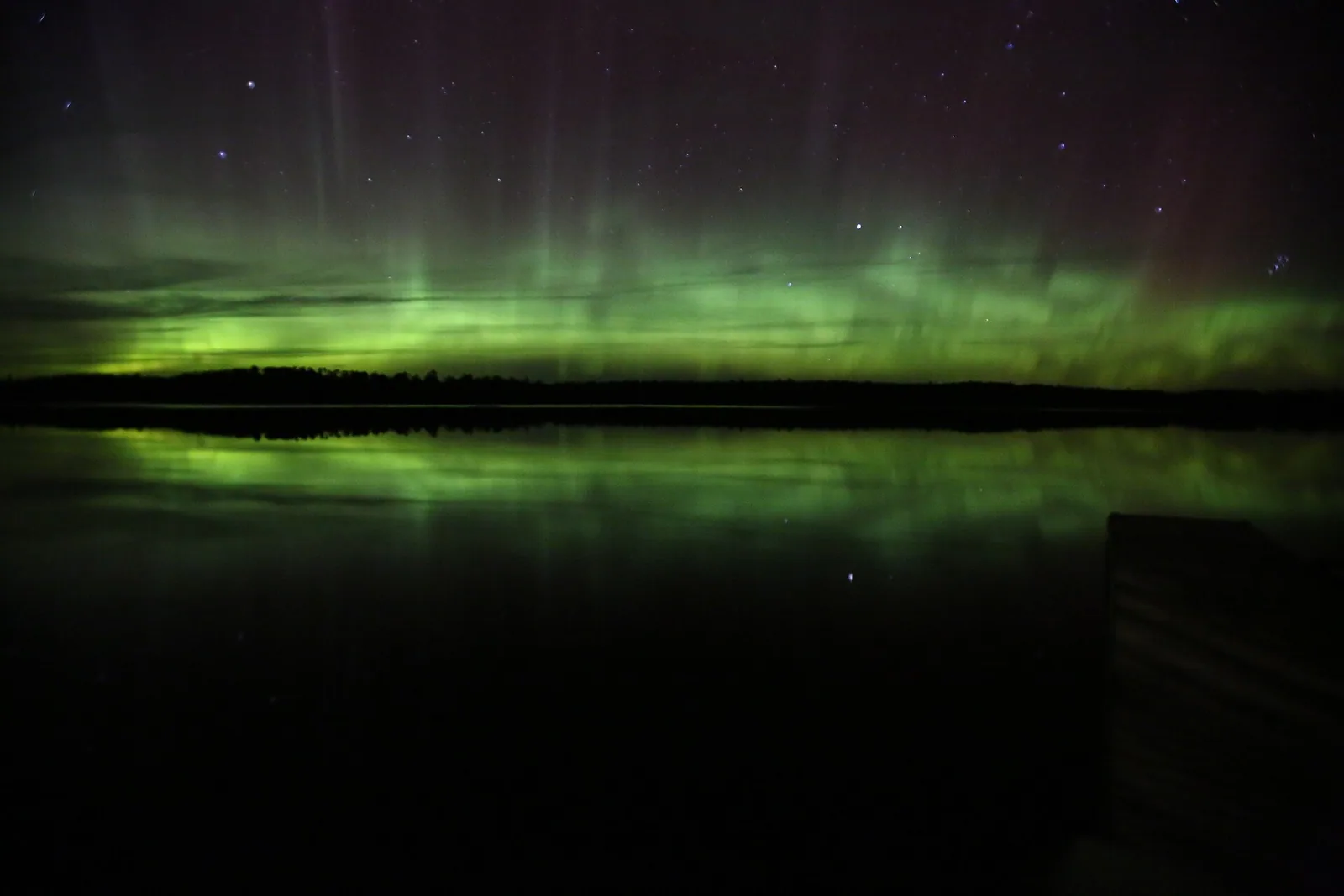
On a clear, low-Moon night, the Milky Way may appear above the lakes in season. The open water can create a wider-looking horizon and, in calm conditions, reflections that make photography especially appealing. Date-verified bright targets, constellations and meteors may also be worthwhile. Shoreline trees can block lower targets, so the exact horizon matters more than a general park-darkness rating. Voyageurs adds one possibility the desert parks do not: aurora. It is never guaranteed. A strong space-weather forecast still fails when clouds, fog or smoke cover the northern horizon. To make an aurora trip worthwhile, you need both elevated activity and a clear view north.
By equipment
Naked eye: Broad sky, meteors, Milky Way and aurora when active. Binoculars: More stars and clusters; useful without a complex setup. Telescope: Better at stable drive-up areas than on docks or boats. Camera: Excellent water reflections and aurora potential; label long exposures clearly.
What can spoil the night?
- Cloud, fog or smoke over the lakes
- Insects during warm months
- Cold and ice during shoulder seasons
- Choosing a site that requires water access
- Unstable docks, boats or shoreline footing
- Treating aurora as a promise
Access and seasonal reality
Some recommended sites are vehicle accessible. Others require a trail, dock, campsite or boat. Visitor centers, roads and water routes follow seasonal schedules. Summer brings insects, boat traffic and changing weather. Shoulder seasons can add cold, wet footing and shortened services. Winter turns water access into an ice and road question rather than a summer boating question. Check the official NPS stargazing page and current conditions before leaving. Confirm the exact site’s access method instead of relying on a broad “Voyageurs stargazing” recommendation.
Safety and final checks
- Confirm whether the exact site is drive-up, trail or water access.
- Check clouds, fog, temperature, insects and northern-horizon conditions.
- Review road, ice and water status.
- Save maps offline and bring a dim red light.
- Pack layers, insect protection and stable footwear.
- Do not begin a nighttime boat trip without a complete navigation and safety plan.
What should you do if conditions change?
If a remote option becomes impractical, use a confirmed drive-up site such as Meadwood Road or the Rainy Lake visitor-center area, subject to current access. A less dramatic location is better than improvising around water after dark.
Frequently asked questions
Is Voyageurs good for stargazing?
Yes. The park offers dark skies, lake horizons and two NPS-designated easy-access areas at Meadwood Road and the upper Rainy Lake Visitor Center parking area. A useful visit still depends on clouds, fog, smoke, Moon timing, seasonal access and the exact horizon.
Can you see the northern lights?
Sometimes, but aurora is intermittent and never guaranteed. You need sufficient geomagnetic activity, darkness, a clear northern horizon and low enough cloud, fog and smoke. Use a current aurora source and local forecast rather than treating the park’s latitude as a promise.
Where should a first-time visitor go?
Start with a confirmed vehicle-accessible area such as Meadwood Road Day Use Area or the upper Rainy Lake Visitor Center parking area. These avoid the boat, campsite and nighttime-navigation demands attached to many remote lake views.
Can you see the Milky Way?
It may be visible when the relevant part of the Milky Way is seasonally above the horizon and the sky is clear, dark and low in moonlight. Use the date-specific Milky Way planner for timing rather than assuming every clear night offers the same view.
Do all viewing sites have road access?
No. Some options require a trail, campsite, dock or water travel. Kettle Falls, for example, is not a casual drive-up destination. Confirm the access method and current conditions for the exact location before leaving.
Is the Voyageurs Forest Overlook trail a good nighttime route?
Do not assume so. The NPS identifies the parking area for stargazing, while the trail has separate use guidance and the former overlook is affected by tree growth. Use the developed area unless current official information supports a nighttime walk.
Do you need a boat to stargaze at Voyageurs?
No. Meadwood Road Day Use Area and the upper Rainy Lake Visitor Center parking area are designated easy-access choices. A boat becomes relevant only when you deliberately choose a water-access campsite, Kettle Falls or another remote shoreline location.
Official sources
Operational sources rechecked July 28, 2026. Seasonal roads, facilities, construction, ice and water access must be rechecked before travel. Source check completed July 28, 2026. Recheck current official alerts before travel.