
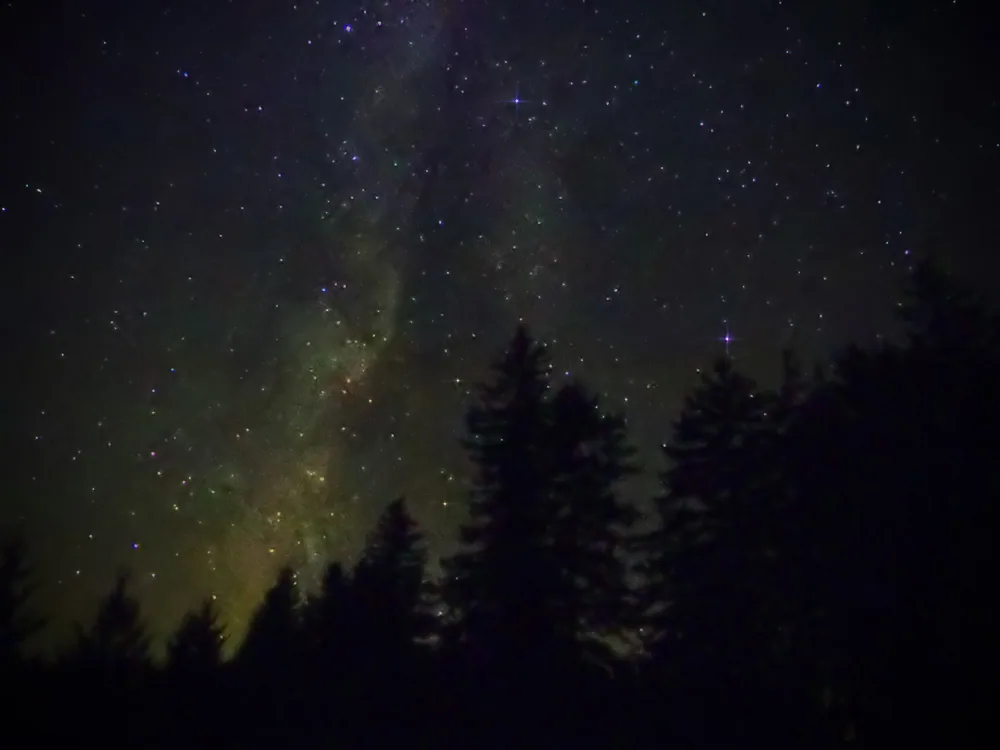

Is Cherry Springs worth the trip?
Cherry Springs is worth the trip only when you choose the night-use area that matches your plan. The public viewing area is for a few hours of casual observing, the rustic campground is for overnight camping, and the astronomy field is a controlled overnight area for serious observers with equipment. The public viewing area is for shorter visits. The rustic campground is for campers. The Overnight Astronomy Observation Field is designed for serious overnight observing and requires registration and a fee.
The Star Window’s take
- Best for: East Coast dark-sky trips, telescope use and planned overnight observing
- Main advantage: Three purpose-built options for short visits, camping and serious overnight observing
- Main limitation: The lighting, parking, registration and overnight rules change by area
- Best first move: Decide whether you are visiting briefly, camping or observing overnight
Are conditions strong enough to consider the trip?
Cherry Springs can be dark and still disappoint under cloud, haze or a bright Moon. Go: Mostly clear with a useful dark window and no access alert. Go for bright targets: A bright Moon limits the Milky Way but leaves the Moon, planets and brighter constellations. Choose another night: Widespread cloud, heavy haze, storms or unsafe road conditions. Next step: Check tonight’s stargazing conditions
Which area should you use?
Cherry Springs is not one viewing field with interchangeable parking. It is three different trip types sharing one park.
Night Sky Public Viewing Area
Use this for a shorter evening visit when you do not plan to camp or keep a full observing setup in place overnight. It is the simplest choice for a beginner who wants to arrive, watch the sky and leave after the session. The public area is not an overnight campsite. Pack so you can carry everything out, prepare your phone and lights before arrival, and do not build the trip around sleeping in the vehicle afterward.
Rustic Campground
Choose this when camping is part of the trip and you want legal overnight accommodation near the dark-sky area. A campsite does not grant access to the Overnight Astronomy Observation Field or replace its separate registration and rules. Check campground availability before building the trip around an overnight stay. The campground follows its own reservation and lighting rules and does not provide access to the astronomy field.
Overnight Astronomy Observation Field
This is the serious observing option for people bringing telescopes, cameras or equipment they plan to keep set up through the night. Registration and a fee are required. Arrive before dark whenever possible. Late headlights, open doors and white interior lights can disturb observers whose eyes and equipment have been adapting for a long time. White light, vehicle movement and arrival procedures follow stricter rules here than they do in the public viewing area or rustic campground. Best first-visit rule: If you are unsure which area you need, start with the public viewing area or a legal campsite. Do not reserve or enter the overnight field merely because it sounds like the darkest option.
What will the sky look like?
Under clear, low-Moon conditions, Cherry Springs can reveal a dense star field and the Milky Way in season. The protected observing environment reduces the stray white light that often ruins dark adaptation at easier roadside sites. For a beginner, the first surprise may be how many stars appear between the constellations you already know. The Milky Way usually looks like a pale, uneven band—not the saturated blue or purple structure shown in long-exposure photography. A telescope can add detail to selected targets, but it is not required. The park’s strongest advantage is the dark naked-eye sky and the way the observing rules protect it.
What can spoil the night?
- Choosing the wrong viewing area
- White light from phones, headlights or flashlights
- Arriving late and disturbing an overnight field
- Cloud, damp air or haze
- Cold, damp conditions and limited on-site services
Access and overnight rules
The park is open year-round, but each astronomy area follows its own rules. The public area is for shorter viewing, the campground is for legal camping, and the overnight field is a controlled observing area with registration and a fee. Check the official Pennsylvania DCNR stargazing page before leaving. Recheck fees, arrival instructions, field availability, lighting restrictions and any event-specific changes. Decide where you will sleep, how you will leave and which area you are using before the sky gets dark. Do not rely on moving between areas after arrival to solve a reservation or registration mistake.
Safety and final checks
- Confirm the correct viewing area and reservation or registration needs.
- Check clouds, Moon timing, temperature and road conditions.
- Bring a dim red light and prepare the phone before arrival.
- Pack layers, water and a chair.
- Arrive before dark for an overnight setup.
What should you do if conditions change?
If the overnight field is unavailable, do not assume the public area allows camping. Use a legal campground or lodging and return for a shorter observing session.
Frequently asked questions
Is Cherry Springs good for stargazing?
Yes. The park offers separate areas for short public viewing, casual overnight camping and serious overnight astronomy. The trip still depends on clouds, Moon timing, temperature, damp air, road conditions and choosing the correct area before arrival.
Can you camp in the public viewing area?
No. Pennsylvania DCNR describes the Night Sky Public Viewing Area as the short-term option for a few hours of observing. Use the rustic campground, the permitted overnight astronomy field or legal lodging when sleeping is part of the plan.
Does the overnight field require a fee?
Yes. Users of the Overnight Astronomy Observation Field must register, obtain a permit and pay the current user fee before setting up. Arrival and parking procedures also change after dusk, so read the current official instructions before travel.
Are white lights allowed?
The rule depends on the area. White light is prohibited on the Overnight Astronomy Observation Field, while the public viewing area and rustic campground have different guidance. Use a dim red-filtered light wherever practical and follow the current rules for the exact area you selected.
Can you see the Milky Way?
It may be visible when the relevant part of the Milky Way is seasonally above the horizon and the sky is clear, dark and low in moonlight. Use the date-specific Milky Way planner for timing rather than assuming the view will be the same throughout the year.
Official sources
Operational source rechecked July 28, 2026. Source check completed July 28, 2026. Recheck current official alerts before travel.