
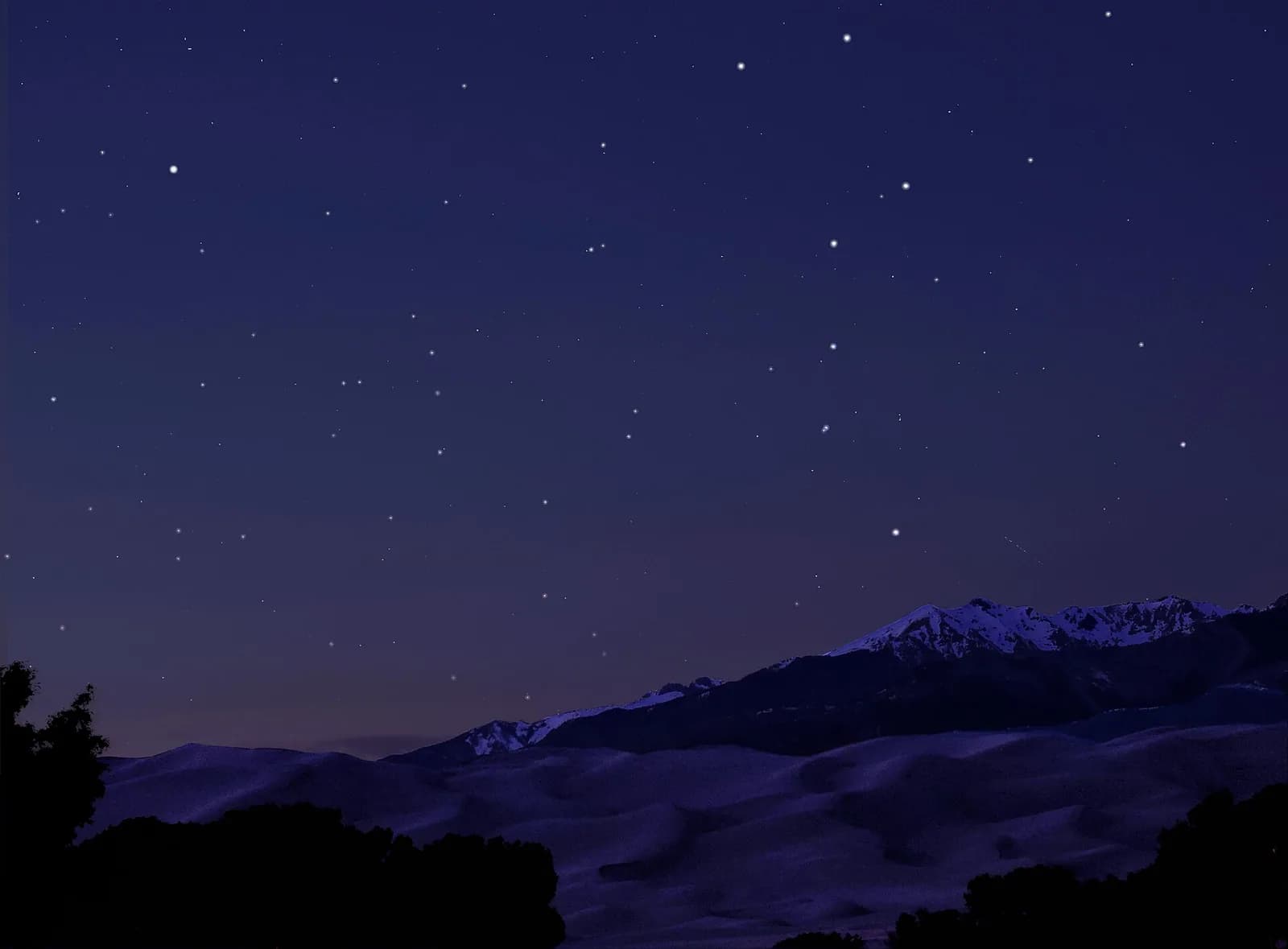
Is Great Sand Dunes worth the trip for stargazing?
Great Sand Dunes is worth considering for either a dark-sky session or a moonlit landscape, but those are different plans. A low-Moon window favors faint stars and the Milky Way in season. A bright Moon reduces that contrast but makes the dune ridges and shadows easier to see. The park is open 24 hours, and ordinary night-sky viewing does not have a time limit. The easiest starting point is the Main Dunes Parking Lot and Medano Creek area. The catch is weather. Wind, storms, cold and sand make this less forgiving than a paved overlook.
The Star Window’s take
- Best for: Milky Way planning, moonlit dunes, night photography and families staying nearby
- Main advantage: Dark skies paired with a dramatic open landscape
- Main limitation: Wind, cold, storms and difficult movement on sand
- Best first move: Arrive before dark and use the Main Dunes Parking Lot
Is tonight worth going?
Check the sky and the ground. A clear forecast can still become uncomfortable when wind lifts sand or a storm builds over the mountains. Go: Mostly clear, manageable wind and a useful dark or moonlit window. Go for the landscape: A bright Moon limits the Milky Way but lights the dunes. Choose another night: Thunderstorms, strong wind, dangerous cold, heavy cloud or poor road conditions. Next step: Check tonight’s stargazing conditions
Where should you view?
Main Dunes Parking Lot and Medano Creek
This is the most practical first choice. You can park at an established area, see the dune field before dark and decide how far onto the sand you actually want to walk. For many visitors, the edge of the dunes is enough. Walking farther can improve the landscape experience, but it also creates a harder return. Distances feel different after dark, wind can erase footprints and the parking area may disappear behind the dune shape.
Visitor center porch and amphitheater
These developed areas can be a better fit for families, limited mobility or a shorter session on firmer ground. Confirm current after-hours access and do not assume every facility remains open because the park itself is open 24 hours.
Camping on the dunes
Overnight dune camping requires a permit. It is a separate backcountry plan with navigation, weather and equipment demands—not an extension of ordinary stargazing from the parking area. Best first-visit rule: See the dunes before dark, start close to the established parking area and move farther only when you are confident about the route back.
What will you actually see?
On a clear, low-Moon night, the Milky Way may form a pale band above the dunes when it is seasonally in view. Stars will look much denser than they do near a city, but the sky will not resemble a saturated long-exposure photograph. The dunes give this page a second honest promise. A bright Moon weakens faint stars but can turn the sand into a high-contrast landscape of ridges and shadows. When the landscape matters more than faint stars, the moonlit version may be the better choice. Wind and airborne sand can reduce contrast and make cameras or optics unpleasant even when clouds are absent. The best forecast is not only clear—it is clear with manageable wind.
By equipment
Naked eye: The broad sky, constellations, meteors and the Milky Way in season. Binoculars: More stars and brighter clusters with little setup. Telescope: Useful for selected targets, but wind and sand complicate setup. Camera: A major strength. Label long exposures clearly because they show more color than the eye.
What can spoil the night?
- Wind: Blowing sand makes sitting, photography and optics difficult.
- Storms: Lightning and fast weather changes matter more than sky darkness.
- Cold: High-desert temperatures can drop quickly after sunset.
- Poor navigation: Walking far onto the dunes creates a harder return in darkness.
Access, parking and overnight rules
Great Sand Dunes is open 24 hours. Ordinary stargazing does not require a reservation, but facilities, roads and specific overnight uses follow separate rules. Use established parking and do not confuse late viewing with permission to camp on the dunes. A backpacking permit is required for overnight dune camping. Check the official NPS night-experience page, current conditions and backpacking guidance before leaving.
Safety and final checks
- Check hourly clouds, wind, lightning and temperature.
- Choose the parking area before sunset.
- Carry a dim red light and save the route offline.
- Bring layers, water and closed-toe shoes.
- Stay oriented to the parking area if walking onto the dunes.
- Confirm any camping permit before planning to remain overnight.
What should you do if conditions change?
If wind or sand makes the dunes unpleasant, shorten the session and use a firmer developed area near the visitor center, subject to current access. If the whole region is cloudy, compare other Colorado destinations on the state page rather than chasing openings through mountain roads.
Frequently asked questions
Is Great Sand Dunes good for stargazing?
Yes. It is an International Dark Sky Park with 24-hour access and a large open landscape. The practical quality of a visit still depends on clouds, wind, storms, temperature, Moon timing and how far you plan to walk onto the sand.
Where should a first-time visitor go?
Start at the Main Dunes Parking Lot and Medano Creek area, and arrive before dark so you can see the terrain and your return route. A developed area near the visitor center may be a better fit when firmer ground or a shorter session matters.
Can you see the Milky Way?
It may be visible when the relevant part of the Milky Way is seasonally above the horizon and the sky is clear, dark and low in moonlight. Use the date-specific Milky Way planner rather than treating the park’s dark-sky designation as a timing guarantee.
Does a full Moon ruin the trip?
No. It weakens faint stars and Milky Way contrast, but it can light the dune ridges and create a useful landscape-viewing or photography night. Choose the date based on whether your priority is the faint sky or the dunes themselves.
Can you camp on the dunes overnight?
Only with the required backcountry permit and the preparation expected for a separate backcountry trip. Late-night viewing from the parking area does not create permission to remain on the dunes overnight.
Do you need a telescope?
No. The broad naked-eye sky and the dune landscape are the main attractions. Binoculars are an easy addition, while a telescope is optional and becomes harder to manage when wind or blowing sand is present.
Official sources
Operational details should be checked again before travel. Source check completed July 28, 2026. Recheck current official alerts before travel.